Chinese
Phone:0391-5616777/5297518/13839195488/15239020222

Phone:0391-5616777/5297518/13839195488/15239020222
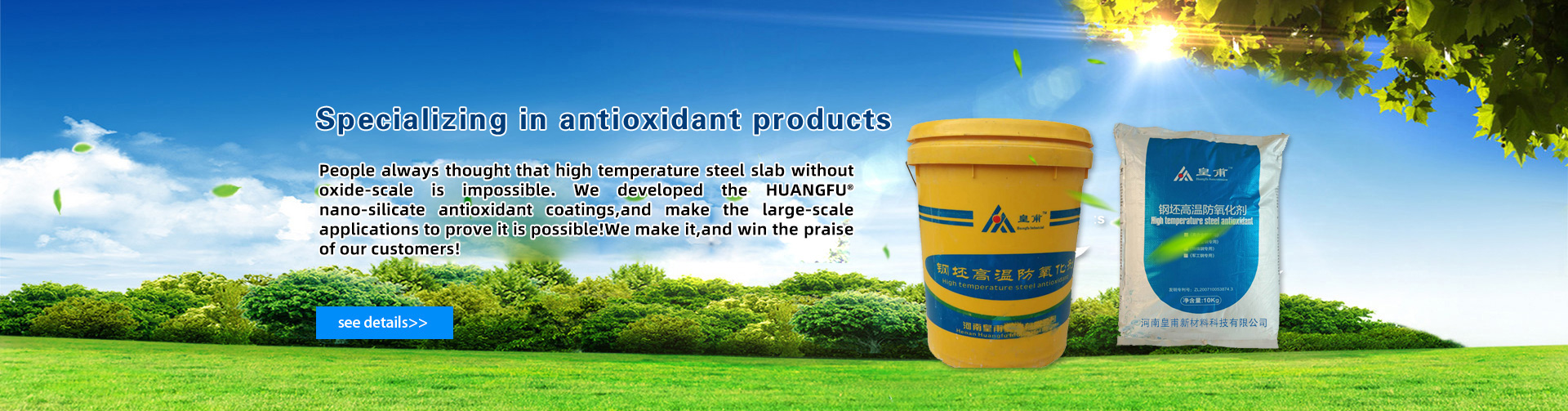

Duplex stainless steel combines high strength with excellent resistance to chloride-induced corrosion, making it a "star material" in sectors such as marine engineering, petrochemicals, and energy and power. From oil and gas pipelines and seawater desalination evaporators to marine propulsion systems, duplex stainless steel is ubiquitous. However, this high-performance alloy is prone to edge cracking and surface micro-cracking during hot working and forging processes—issues that have long plagued the industry by reducing product yield and driving up costs.
The application of nano-silicate anti-oxidation coatings has resolved these problems, significantly increasing the yield of the steel products.
The "Pain of Hot Working" Behind High Performance
Duplex stainless steel possesses a dual-phase microstructure—comprising both ferrite and austenite—that imparts a combination of high strength and ductility. However, during high-temperature forging, heating, or rolling, the surface of the steel billet is highly susceptible to edge cracking or even deep, penetrating surface fissures. There are three primary causes for this:
1. Severe high-temperature oxidation: Prolonged soaking in the heating furnace leads to the formation of a thick, porous oxide scale; when this scale spalls, it removes underlying base metal, creating sites for micro-crack initiation.
2. Non-uniform temperature distribution: Heat dissipates rapidly from the billet's edges and corners while the core remains hot; the resulting temperature gradient causes thermal stress concentration, triggering edge cracking.
3. Microstructural phase mismatch: Differences in the thermal expansion coefficients of the two phases at high temperatures, combined with uneven elemental diffusion, further exacerbate surface defects.
Traditional protective measures—such as controlling heating rates or using protective atmospheres—are either prohibitively expensive or difficult to apply to complex-shaped workpieces. The industry urgently requires a solution that is simple to implement, highly effective, and cost-efficient.
Nano-Silicate Coating: An "Invisible Armor" to Mitigate Cracking Risk
Based on years of research and development in anti-corrosion materials, Qinyang Huangfu has successfully developed a high-temperature anti-oxidation nano-silicate coating. This water-based coating is non-toxic, odorless, and extremely convenient to use—it is uniformly applied to the surface of the steel billet by spraying before heating in the furnace, requiring a coating thickness of only 0.1–0.3 mm.
Its mechanism of action can be summarized into two core functions:
First, dense isolation, significantly inhibiting oxidation.
The nano-silicate particles in the coating rapidly sinter and melt at high temperatures, forming a continuous, dense, ceramic-like protective film. This film effectively blocks the diffusion of oxygen from the furnace to the surface of the steel billet, reducing the amount of oxide scale formation and eliminating surface micro-cracks caused by oxidation peeling at the source.
Second, a thermal barrier effect, stabilizing the temperature of the steel billet.
The coating has low thermal conductivity and a certain infrared reflectivity, essentially providing the steel billet with an "insulating coat." During the heating process, it slows down the rapid heating and cooling of the edges and corners, making the temperature field of the entire billet cross-section more uniform, thereby significantly reducing the tendency for edge cracking caused by thermal stress concentration. User feedback from the field indicates that after using this coating, the incidence of edge cracking in duplex stainless steel forgings has decreased, and the yield has greatly improved.
Export Manager:Victor Huangfu
CELL:+86 15239020222
Whatsapp:+86 13203990791
MAIL:hnhuangfugs@gmail.com
ADD:Baizhuang Industrial Zone, Changfu Road,Qinyang City,Henan Province, CHINA